Returning to Work Is More Than a Date on the Calendar
By Godfrey Jerry, WCB’s Chief Operating Officer
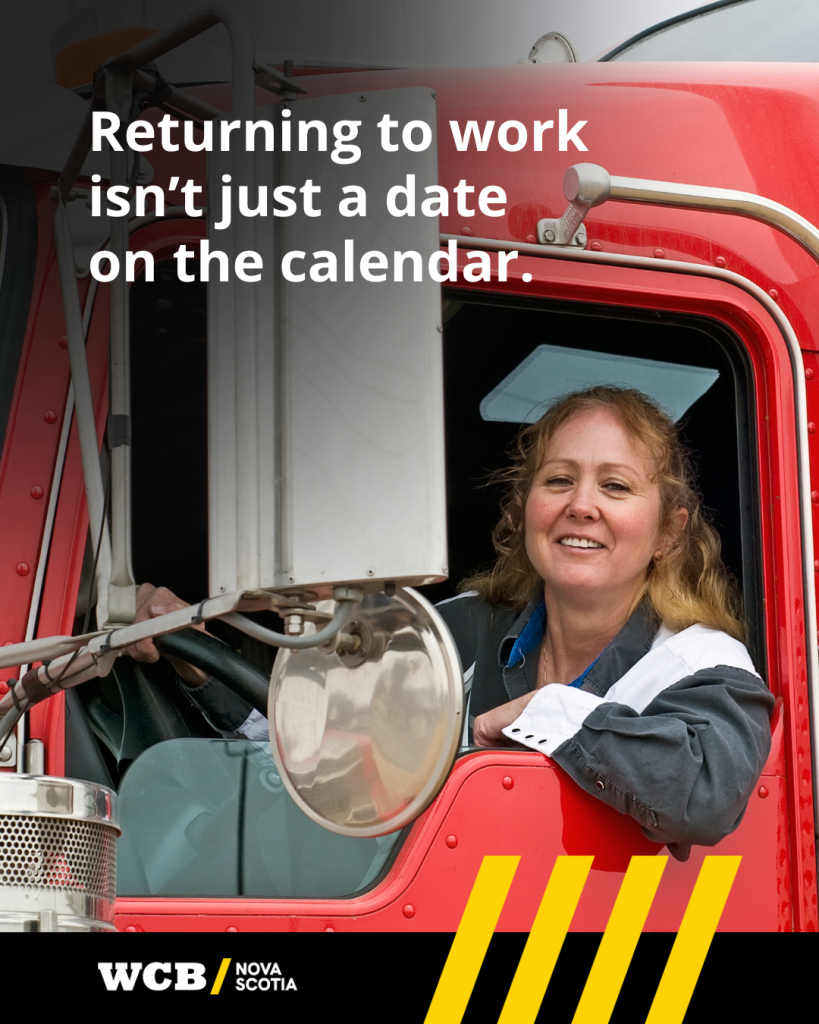
Helping someone get back to safe, meaningful work after an injury just makes sense.
In fact, 94 per cent of Nova Scotians who get hurt at work return to the job in some capacity.
That’s encouraging — but it’s not the whole story.
Because returning to work is only the first step.
A recent review in the International Journal of Environmental Research and Public Health reinforces an important point: getting back to work isn’t the finish line. How people experience work after they return matters just as much.
Keeping a worker’s voice front and centre in their return-to-work plan is key to helping them truly move forward. The plan needs to be practical, but also human. Because when someone is off work due to an injury, the impact often reaches far beyond the workplace.
So when people have a say in how their job supports their recovery, everyone benefits — the worker, their loved ones, their colleagues, and their employer.
Kelly Henderson, Executive Director of the Trucking Human Resource Sector Council Atlantic, has seen this firsthand.
“Return-to-work needs to be meaningful for a worker to be fully engaged,” Henderson says. “As we witnessed with one candidate, his return-to-work training plan allowed him to get back to work faster than he would have without it. He learned new skills and moved into an occupation that better supported his current needs. His feedback and morale were positive, noting the experience opened a door he never expected.”
Transitional work and modified duties also play an important role, because they help people reconnect with their workplace while they continue to recover.
It goes without saying, being off work because of an injury can be stressful, which is why these options matter. When employers stay connected during recovery, plan ahead for transitional duties, and make accommodations where needed, it helps set workers up for a successful return.
As Monica Thomsen, Executive Director of the Nova Scotia Trucking Safety Association, explains, staying in touch and offering modified duties can make all the difference.
“Preparing for return-to-work starts long before an injury happens. When employers train supervisors, offer modified duties, and stay connected with healthcare providers, the return is smoother and workers feel supported when they come back. We often hear from workers that modified duties helped them regain confidence and reconnect with their team — a reminder that return-to-work is not just about recovery, but about restoring routine, purpose, and belonging in the workplace.”
Here are a few simple ways employers can support someone’s journey back after an injury:
Contact the worker right away and stay in contact throughout recovery.
Work together to establish a return-to-work plan.
Provide suitable work that, where possible, restores the worker’s pre-injury earnings.
Provide WCB with any requested information related to the return-to-work process.
At the end of the day, returning to work is so much more than getting someone back on the schedule. It’s about helping people rebuild confidence, reconnect with their workplace, and move forward after an injury.
For employers, the message is simple: stay connected, plan ahead, and make space for meaningful return-to-work opportunities. When you do, you’re not just supporting recovery — you’re helping build a stronger, safer workplace for everyone.