WCB’s Approved Rate Range
WCB’s Approved Rate Range Framework:
- Helps guide changes to employer rates
- Signals when WCB may make recommendations to Government for improvements to worker benefits.
The goal is a financially sustainable workers’ compensation system that helps and protects workers and provides fair, stable rates for employers.
Learn more about the Approved Rate Range Framework [PDF].
What is the Approved Rate Range Framework?
The framework helps WCB decide when to:
- Adjust the provincial average assessment rate for employers
- Recommend to Government improvements to worker benefits
It does this by looking at the system’s overall financial health—also called the funded percentage. That’s how much money is available to cover future claim costs.
The 3 funding levels
WCB uses 3 thresholds to guide decisions:
1. Take action: Upper threshold – Above 115%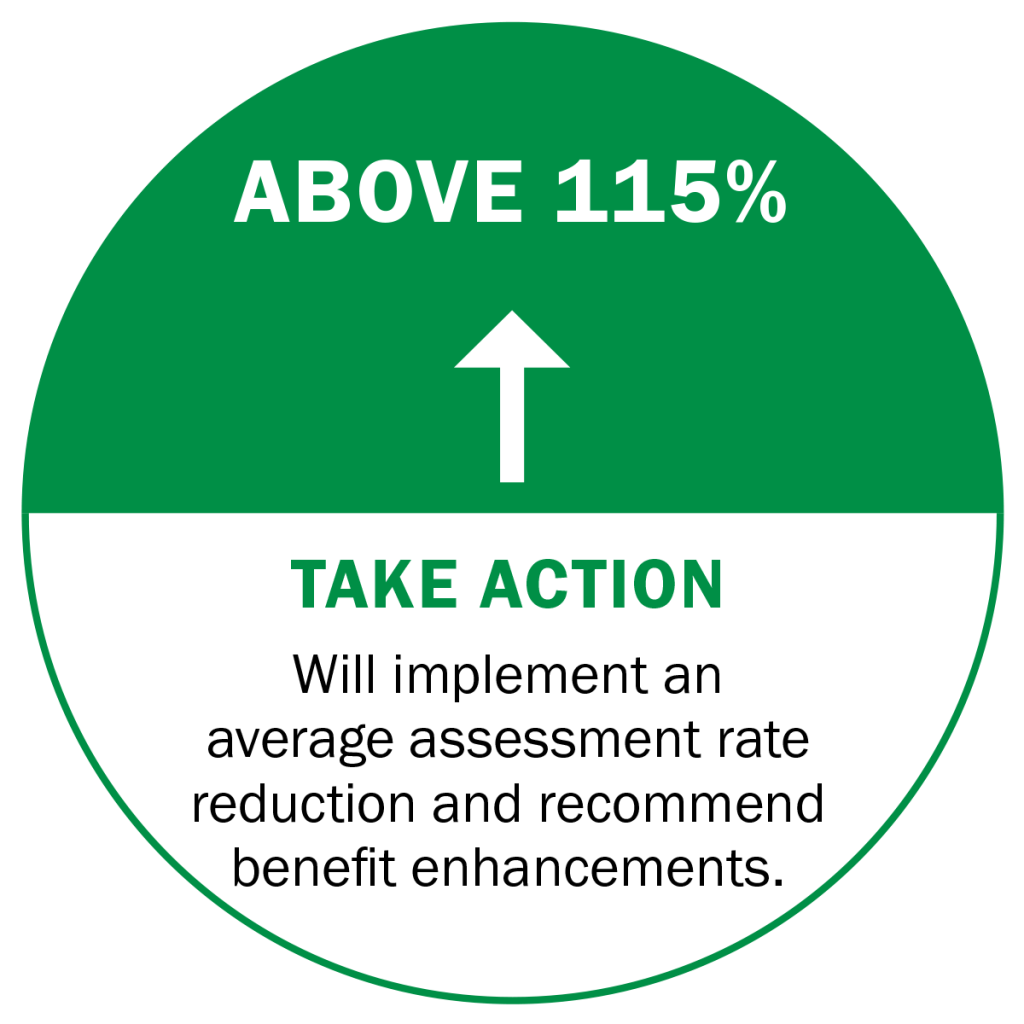
If the system is funded above 115%, the portion above 115% can be used to:
- Recommend to Government improvements to worker benefits
- Lower the average assessment rate for employers
For example: if the upper range is 120%, 5% is available for actions.
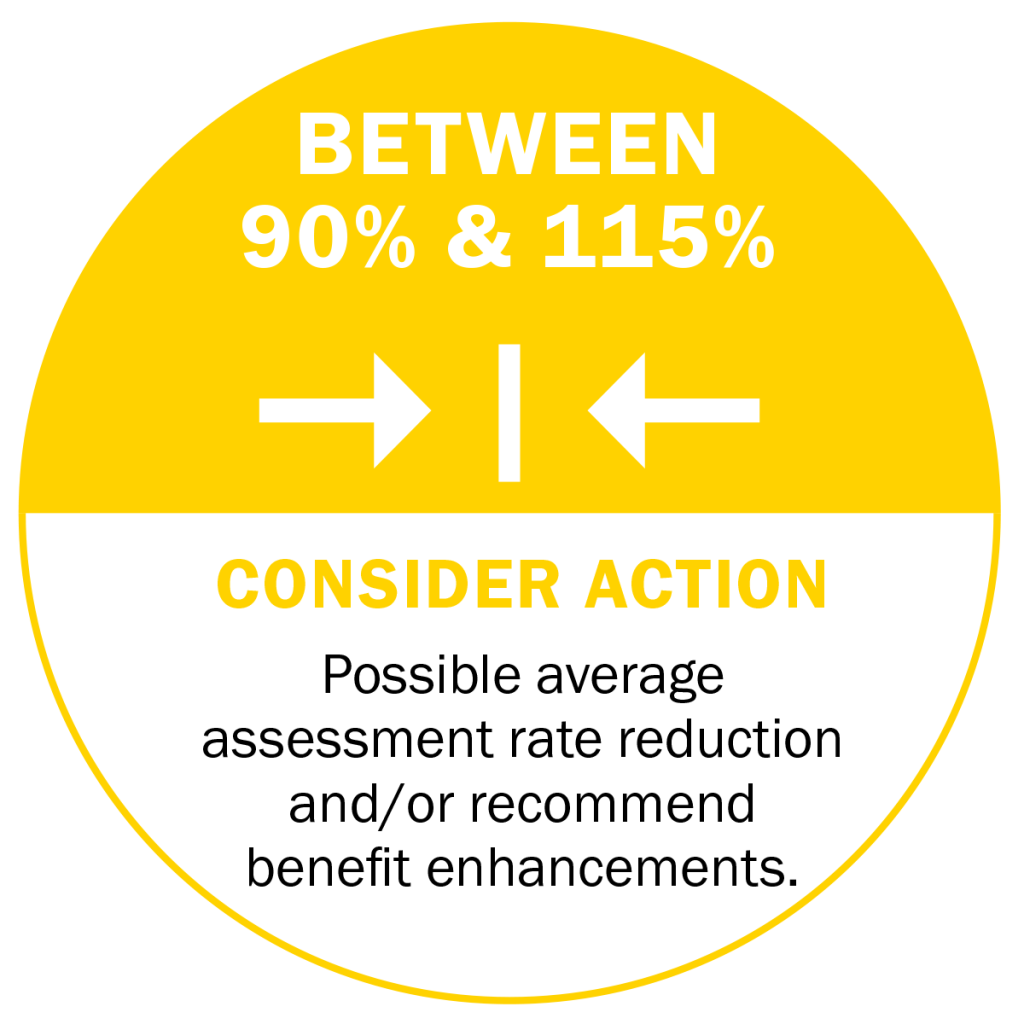 2. Consider action: Within range – between 90% and 115%
The workers' compensation system is stable. Changes to the average assessment rate or benefit recommendations may be considered, but only if they support long-term sustainability.
3. Take action: Lower threshold – below 90%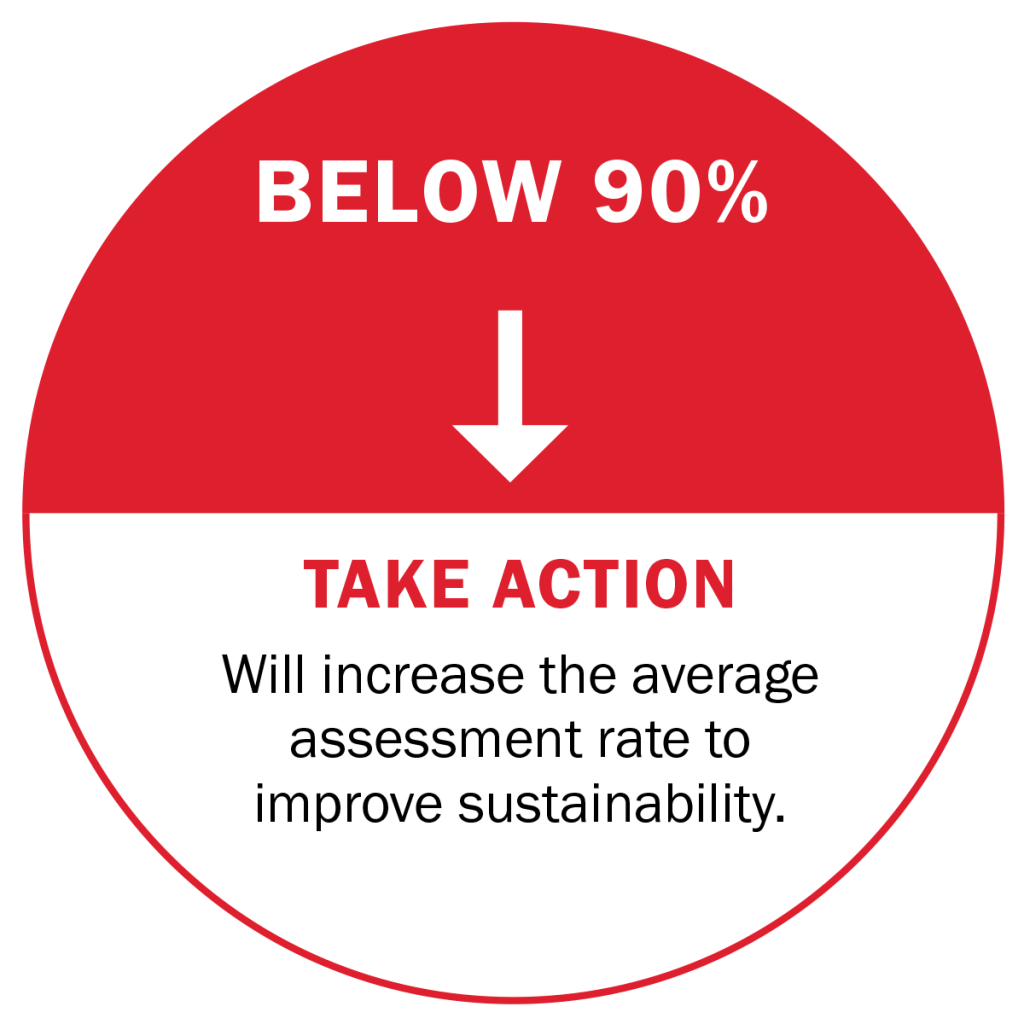
If funding falls below 90%, the average rate for employers will go up gradually—over 5 years—to bring funding back to at least 90%.
Why it matters
This framework supports steady, informed decisions and ensures the system can meet its responsibilities—now and in the future.
What else affects the Approved Rate Range?
WCB sets employer rates each September, based in part on funding levels as of March 31. But other factors matter too:
- Assessment rates must cover all current and future costs of claims incurred in that year, as required by law.
- Funding is calculated using the “going concern” method, which considers the long-term expectations of the investment fund to value benefits liability.
- As always, other considerations include injury trends, and overall claims costs and operational results.
These factors all combine help keep rates fair and maintain the system's financial stability.