Secondary Ergonomic Hazards
Secondary ergonomic hazards can increase the risk of musculoskeletal injuries (MSIs) by acting in combination with primary ergonomic hazards or increasing the physical demands of work activities.
The four secondary ergonomic hazards are:
- Aspects of workplace layout
- Characteristics of objects handled
- Environmental conditions
- Organization of work
Understanding these hazards can help employers identify factors that contribute to MSI risk and take steps to reduce them.
Aspects of workplace layout
The design and layout of a workplace can affect how work is performed and influence MSI risk.
Working reaches
Work that requires reaching too far forward, across, or behind the body can place workers in awkward postures and increase the force required to perform a task.
Working heights
Work surfaces that are too high or too low can place workers in awkward postures and increase physical demands.
Seating
Sitting or standing for long periods may increase the risk of MSI. The type of chair used and how workers interact with their workstation can affect comfort and performance.
Floor surfaces
Floor characteristics such as slope, surface texture, material, unevenness, and slip resistance can affect MSI risk. These factors can increase muscle fatigue when standing and increase the force required when pushing or pulling loads.
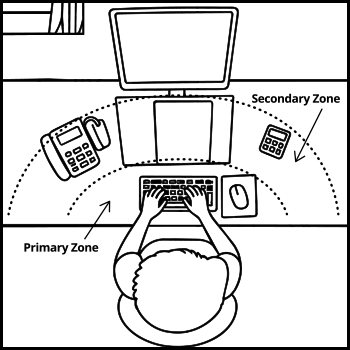
Set up work areas and workstations so that frequently used tools and materials are closer to the worker, in the primary work zone. Less frequently used items can be stored in the secondary work zone.
Characteristics of objects handled
The design and condition of objects can affect the physical demands placed on workers.
Size and shape
The size and shape of an object influence the physical demands placed on the body. Large or bulky objects may require greater force, create awkward postures, or make gripping more difficult.
Load condition and weight distribution
Objects that are slippery, sharp, fragile, hot, cold, rigid, or contain liquids can be more difficult to handle safely. These conditions may increase the force required to grip an object and place workers in awkward postures.
Container, tool, and equipment handles
Handle size, shape, texture, and location can affect how easily an object can be handled.
Tools and equipment that allow workers to use a power grip and maintain a natural wrist posture can reduce risk. Poorly designed handles or objects without handles can increase the force required to perform a task.
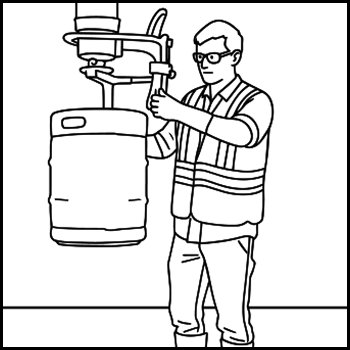
Handling large, irregular-sized objects can require increased force, place workers in awkward postures, and limit visibility. Use an engineering control such as a mechanical lifting device.
Environmental conditions
Environmental conditions can increase the risk of MSI by affecting how work is performed.
Cold temperatures
Cold temperatures and drafts can affect muscle flexibility and efficiency, increasing the force required to perform work.
Illumination
Poor lighting or glare can contribute to eye strain and awkward postures.
Vibration
Hand-arm vibration can occur when workers grip vibrating tools or equipment. Whole-body vibration can occur when workers sit or stand on vibrating equipment or surfaces. Cold temperatures can increase the effects of vibration.
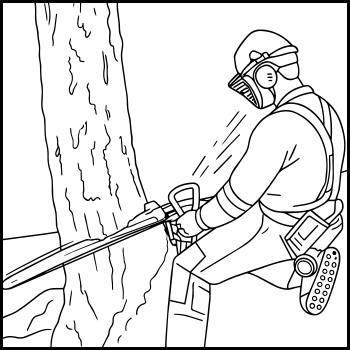
Hand-arm vibration can occur when gripping vibrating tools. When purchasing tools, consider the level of vibration stated by the manufacturer.
Organization of work
The way work is organized can affect the risk of MSI.
Work-recovery cycles
Using the same muscles repeatedly or for long periods without enough recovery time can lead to fatigue and increase the risk of injury.
Scheduling regular breaks helps workers recover and return to a resting state.
Task variability
Changing work tasks and body positions throughout a shift allows workers to use different muscles and postures. This can reduce repetition and allow tissues to recover.
Work rate
This is the speed at which tasks are performed. Quick, non-stop movements and pressure to maintain a specific work rate can increase MSI risk.
Multiple ergonomic hazards
Tasks often involve more than one ergonomic hazard. The more hazards associated with a task, the greater the risk of injury.
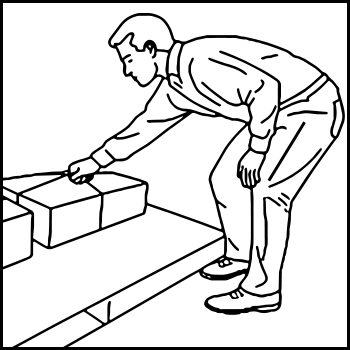
For example, a worker repeatedly lifting boxes from a pallet to a storage shelf may be exposed to multiple hazards.
Primary ergonomic hazards may include:
- Force — lifting heavy boxes with one hand
- Work posture — bending forward at the waist and reaching with the arm and shoulder
- Local contact stress — gripping narrow plastic strapping
- Repetition — performing the same lifting task throughout the day
Secondary ergonomic hazards may include:
- Workplace layout — the location of the pallet requires reaching below knee height and using extended reaches to grab boxes
- Characteristics of objects handled — the boxes do not have handles, increasing the force required to grip them
- Organization of work — limited recovery time and little task variation between lifts