Primary Ergonomic Hazards
Primary ergonomic hazards are the direct physical demands of work that can contribute to musculoskeletal injuries (MSIs).
The four primary ergonomic hazards are:
- Force
- Repetition
- Work posture
- Local contact stress
Understanding these hazards can help employers identify risks and take steps to prevent injuries before they occur.
Force
Force is the effort a worker exerts to perform a task. The greater the force required, the greater the risk of an MSI. Muscles and tendons can become overloaded when force is applied repeatedly or for long periods.
Work activities that commonly require force include:
- Lifting or lowering
- Pushing, pulling, or carrying
- Gripping or pinching
Lifting or lowering
Whenever a worker lifts or lowers an object, force is exerted. Several factors affect how much force is required, including the weight of the load and where it is lifted from and to.
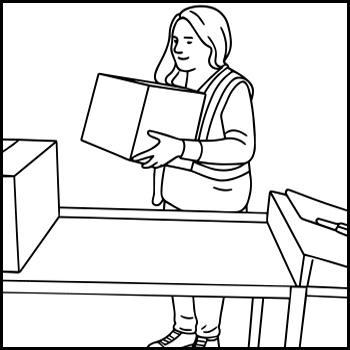
Design the workplace so loads can be lifted and lowered at waist level whenever possible.
Case study: Layering controls at a cabinet company
Workers were required to handle heavy stone countertops, creating high-force and awkward-posture hazards.
The employer assessed the hazards with workers and tested different solutions. The final approach combined two levels of controls:
- Engineering control: A stone lifter that automatically locked when carrying a load. Workers reported it was safer than lifters that required them to squeeze into a tight space to release a latch.
- Administrative control: Installations were planned in advance to reduce time pressure and handling frequency.
The result: Greater efficiency, fewer injuries, and savings that exceeded the cost of the equipment.
Pushing, pulling, or carrying
Several factors affect the force required to push, pull, or carry an object. Some of these include: the weight of the load, the floor surface, and the type of equipment being used.
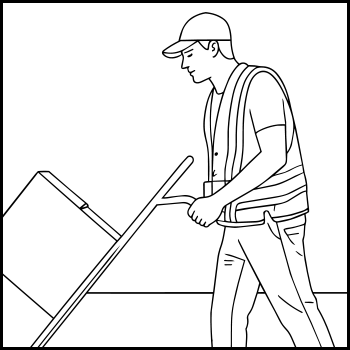
Pushing is generally better than pulling. Pushing a load can take less effort, improve sightlines, and reduce the risk of twisting.
Gripping or pinching
A pinch grip relies primarily on the small muscles of the hand. A power grip uses the entire hand and the muscles of the forearm, making it stronger and more efficient.
When possible, select tools and equipment that support a power grip rather than a pinch grip.
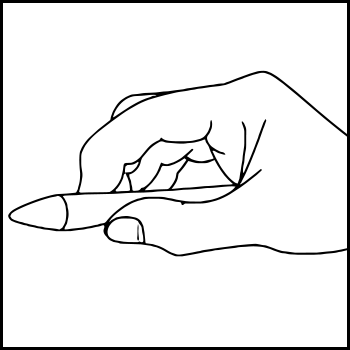
Pinch Grip
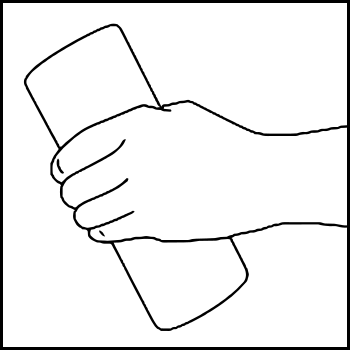
Power Grip
A power grip allows workers to use larger muscle groups and can help reduce fatigue.
Repetition
Repetition is when the same muscles are used repeatedly with little time for rest or recovery.
The risk of injury increases when repetitive tasks are combined with other ergonomic hazards, such as force or awkward postures.
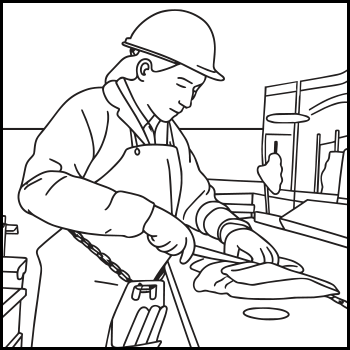
Make repetitive tasks such as cutting safer by taking regular breaks that allow the muscles to rest and recover.
Case study: An inexpensive solution in a garden nursery
A worker repeatedly moved products by hand between conveyor lines and began experiencing wrist discomfort.
The worker reported the issue to their supervisor. The manager worked with the worker and team to identify possible solutions.
- Engineering control: Together, they designed a foot pedal that eliminated the need to pull products by hand. The solution was inexpensive and removed the ergonomic hazard entirely.
Key takeaway: Workers who perform the job often have valuable ideas for improving safety. Involving them early can lead to practical and effective solutions.
Work posture
Work posture refers to the position of the body while performing a task.
Awkward postures occur when joints bend or twist outside their neutral range of motion. These postures place additional stress on muscles, tendons, and other soft tissues and can reduce strength and efficiency.
A static posture occurs when the body remains in the same position long enough to cause discomfort, aches, or fatigue.
Examples of awkward postures include:
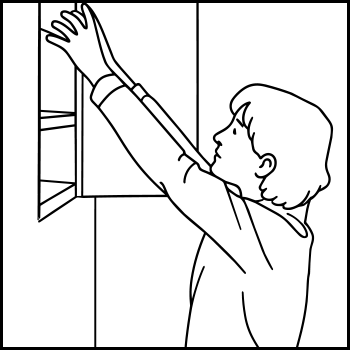 Reaching overhead | 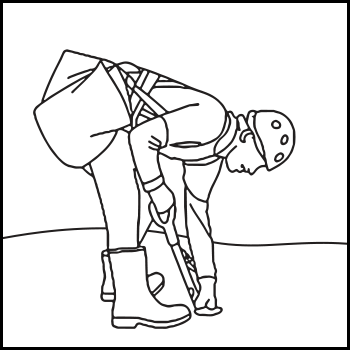 Bending to a low level | 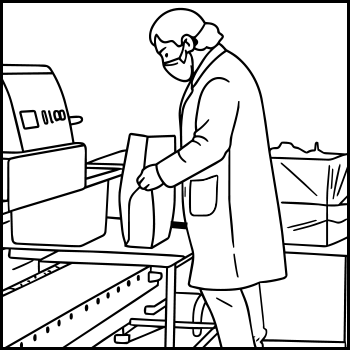 Bending the neck |
Local contact stress
Local contact stress occurs when a hard or sharp object presses against a part of the body. Pressure on nerves and soft tissues beneath the skin can increase the risk of injury.
Local contact stress commonly affects the:
- Knees
- Shoulders
- Elbows
- Wrists
- Fingers
- Hands
Examples include:
- Using tool handles with ridges or hard edges that dig into the hand
- Kneeling on hard surfaces
- Using a work surface with sharp edges that dig into the wrist or forearm
- Using a body part, such as a hand or knee, as a hammer
The risk increases when:
- The pressure is applied to an area with little protective tissue, such as the wrist
- Pressure is applied repeatedly or for long periods of time
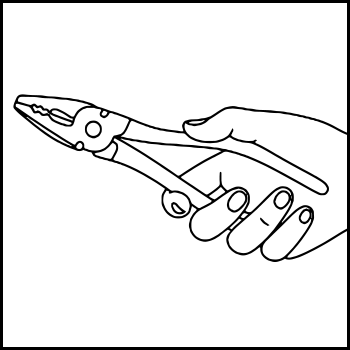
Avoid tools with hard or sharp edges that can dig into the skin.
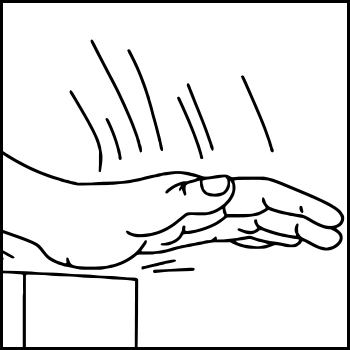
Avoid using parts of your body as a hammer. Use the appropriate tool for the task instead.
Explore secondary ergonomic hazards
In addition to the direct physical demands of work — workplace layout, environmental conditions, object characteristics, and work organization can increase MSI risk.
Learn how these factors contribute to injuries and what employers can do to address them.